| |
|
|
|
Watch for information on the schedule of public forums and other 'Culture Builds' activities.
|
|
|
| |
|
|
| |
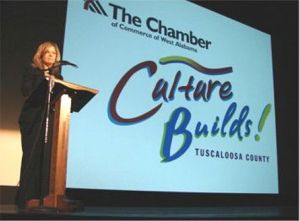 Led by the Task Force on Cultural Assets & Livability of The Chamber of Commerce of West Alabama, along with public and private sector partners, the exciting and creative 'Culture Builds' initiative is underway. The task force, led by Cynthia Lee Almond of Rosen Harwood and a member of the Tuscaloosa City Council, includes key partners: the City of Tuscaloosa, the City of Northport, The University of Alabama, the Tuscaloosa County Commission, the Arts Council of Tuscaloosa County, and a growing number of stakeholders. Led by the Task Force on Cultural Assets & Livability of The Chamber of Commerce of West Alabama, along with public and private sector partners, the exciting and creative 'Culture Builds' initiative is underway. The task force, led by Cynthia Lee Almond of Rosen Harwood and a member of the Tuscaloosa City Council, includes key partners: the City of Tuscaloosa, the City of Northport, The University of Alabama, the Tuscaloosa County Commission, the Arts Council of Tuscaloosa County, and a growing number of stakeholders.
"The purpose of the 'Culture Builds' strategic initiative is to develop a comprehensive creative community and cultural development plan and implementation process," said Almond, "that will enhance the cultural life and livability of Tuscaloosa County and that will directly impact and stimulate the economic vitality of the community."
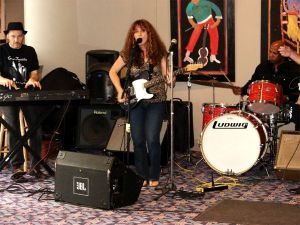
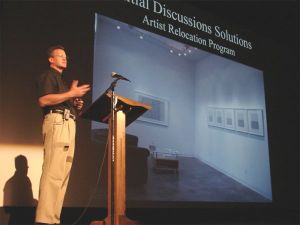 The kickoff event at the Bama Theatre in July was a big success with more than 300 citizens in attendance. Local fine artists opened the show. Members from the consulting group Partners for Livable Communities then made presentations about how they've helped to improve other communities, hinting to what could happen here. The kickoff event at the Bama Theatre in July was a big success with more than 300 citizens in attendance. Local fine artists opened the show. Members from the consulting group Partners for Livable Communities then made presentations about how they've helped to improve other communities, hinting to what could happen here.
"We want the entire community involved in the 'Culture Builds' strategic planning process," emphasized Almond. If you, individually, or your organization would like to be involved, you are invited to contact The Chamber office at 758.7588 or go online to The Chamber's website at www.tuscaloosachamber.com and click on 'Culture Builds'.
 "Our community is vibrant and growing," said Almond. "In planning for growth, it is essential that we have a vision and dream about what we can become. Our 'Culture Builds' livability strategic planning initiative can be a catalyst for making our vision a reality and stimulate involvement from citizens from all walks of life." "Our community is vibrant and growing," said Almond. "In planning for growth, it is essential that we have a vision and dream about what we can become. Our 'Culture Builds' livability strategic planning initiative can be a catalyst for making our vision a reality and stimulate involvement from citizens from all walks of life."
Jim Harrison, III, owner of Harrison Galleries and 2007 Chairman of The Chamber, pointed out, "We are extremely fortunate in Tuscaloosa, Northport and West Alabama to live in an area rich in cultural resources and diversity. Our Chamber recognizes that this plays into the livability of our communities and its potential for economic growth. Indeed, art, culture and our heritage builds communities and helps create a higher quality of life as being a catalyst for education and economic prosperity."
Dr. Hank Lazer, Associate Provost of The University of Alabama and a key leader in the Creative Campus initiative at The University, pointed out that "this strategic planning initiative is so important from the perspective of The University and Creative Campus. 'Culture Builds' will allow us all to collaborate and reflect upon the cultural richness of Tuscaloosa County and develop plans to further enhance our community's livability for all citizens.""This is a unique time and opportunity to shape and fine tune a diverse and broad range of creative activities available to people of all ages and backgrounds," said Lazer. "I believe that the result of this process, with input from all sectors, will be an enriched cultural life for everyone."
Tuscaloosa's Mayor Walt Maddox has also added his support and encouragement for the 'Culture Builds' initiative. He stated that "it is our sincere hope that this effort will enhance the cultural life and livability of the area and that it will directly stimulate and contribute to our economic vitality and progress. We believe in this initiative and are actively investing and participating in this exciting process."
"Today, livability is the defining factor for any community looking to sustain itself in today's constantly changing economy," said Johnnie Aycock, President of The Chamber. "Livability is a combination of interrelated factors, including progressive innovative leadership, cooperation, cultural assets, lifelong learning, and diversity of opportunities, design of place and space, economic vitality, and other crucial investments in quality."
 The 'Culture Builds' strategic planning and implementation process is designed to help define and address how to leverage the area's diverse cultural resources and assets, to expand cultural, entertainment, recreational and educational assets to transform Tuscaloosa County into a "cultural destination" center in Alabama, to leverage and integrate cultural resources to directly enhance economic development and competitiveness as a community, and to identify, foster and implement new cultural and entertainment facilities, venues, programs and events. The 'Culture Builds' strategic planning and implementation process is designed to help define and address how to leverage the area's diverse cultural resources and assets, to expand cultural, entertainment, recreational and educational assets to transform Tuscaloosa County into a "cultural destination" center in Alabama, to leverage and integrate cultural resources to directly enhance economic development and competitiveness as a community, and to identify, foster and implement new cultural and entertainment facilities, venues, programs and events.
"To tap our potential and translate our cultural assets and opportunities into a sustainable economic advantage, the 'Culture Builds' strategic initiative is essential and valuable," according to Aycock. "This is a unique time and opportunity to raise the level of quality and livability of our community; and together, with our strategic partners, this can be achieved. It's going to be an exciting journey, and we invite involvement by all citizens." |
|
|
Top
|
| |
|
|
| |
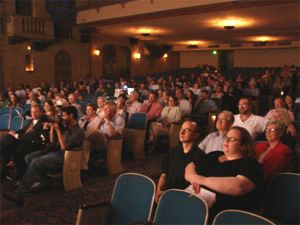 One of the next steps in the 'Culture Builds' strategic planning process includes a community survey. Gathering input from citizens from a cross-section of the community and from all sectors will contribute to a more effective, grassroots cultural development plan. One of the next steps in the 'Culture Builds' strategic planning process includes a community survey. Gathering input from citizens from a cross-section of the community and from all sectors will contribute to a more effective, grassroots cultural development plan.
The survey, which will take about 10 minutes to complete, is designed to develop information and opinions on a broad-variety of cultural issues and interests. Once completed, the information will be submitted as part of the planning process to the Culture Builds leadership team and to our consultants, Partners for Livable Communities.
"The survey by design had to ask a variety of questions," emphasized Chamber President Johnnie Aycock. "It is somewhat long, however, it is easy to complete within about ten minutes, and the input will be crucial to building an effective, strategic plan."
Surveys are in the mail and will also be available online to complete by the October 1st deadline. Watch for your survey or go online to www.tuscaloosachamber.com and click on the 'Culture Builds Survey' icon. It'll be up and running there by tomorrow Friday, September 14th.
Your participation and input is encouraged and appreciated.
|
|
|
Top
|
| |
|
|
| |
Another important aspect of the 'Culture Builds' grassroots approach to strategic planning will be a series of focus group and public forums to be held in October and November. With a goal to involve a cross-section of the Tuscaloosa County community in the planning process, opportunities are being created to provide citizens from all walks of life a platform to express opinions, ideas, and suggestions.
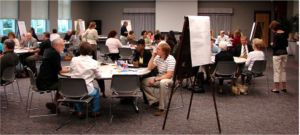
Partners for Livable Communities, the consultant team for 'Culture Builds,' will be involved in conducting focus groups and supporting facilitation of public forums. All information, ideas and suggestions gathered through the forums will be part of the 'Culture Builds' strategic planning process.
Focus group sessions are currently scheduled to be held October 10th through 12th. More information will be available soon. The public forums are still being scheduled, with a goal of at least four forums in October and November. Facilitators will be recruited from the community and trained by the leadership team from Partners for Livable Communities.
Once the focus groups and public forums have been completed, all the information and ideas gathered will be submitted and processed by the consulting team for inclusion in the initial draft of the 'Culture Builds' strategic plan.
Watch for information on the schedule of public forums and other 'Culture Builds' activities.
|
|
|
Top
|
| |
|
|
| |
As The Chamber began to look at a cultural development and livability strategic planning process, several consulting groups were considered. However, one of the most successful and effective teams in the nation--Partners for Livable Communities--quickly rose to the top of the list.
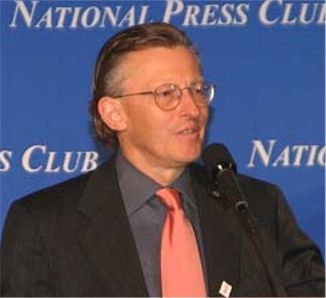 Partners for Livable Communities, based in Washington, DC, is led by President and CEO, Robert McNulty. The national civic and community development organization was founded in 1977, and since its inception, it has worked to improve the livability of communities across the nation. McNulty has been and continues to be one of the prime forces behind the livability movement in the United States. Partners for Livable Communities, based in Washington, DC, is led by President and CEO, Robert McNulty. The national civic and community development organization was founded in 1977, and since its inception, it has worked to improve the livability of communities across the nation. McNulty has been and continues to be one of the prime forces behind the livability movement in the United States.
McNulty received his undergraduate and law degrees from the University of California at Berkeley and is a frequent lecturer and has been a fellow of Harvard and Yale Universities. He has co-authored five books on achieving livability in urban America. McNulty began as an archaeologist with Colonial Williamsburg and later served as assistant to the director of the National Museum of American History at the Smithsonian Institution. He also served as Assistant Director of the Architectural and Environmental Arts Program of the National Endowment for the Arts.
The consulting team also includes other exceptional and experienced leaders associated with Partners for Livable Communities, including Glenda Hood, Chairman of the Board; Lyz Crane, Program Officer; and Mark Barone of Syracuse University.
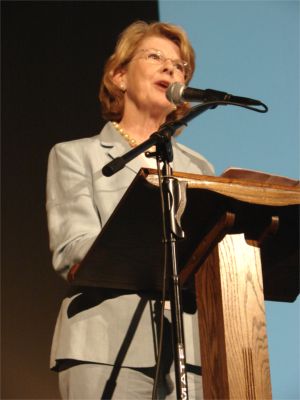 Glenda Hood served as Florida's Secretary of State from February, 2003 through November, 2005. Prior to her appointment by then Governor Jeb Bush, she served as Mayor of the City of Orlando, Florida. Elected the first female Mayor in Orlando in 1992, she served three terms. Prior to becoming Mayor, she served on the Orlando City Council. She is a Past President of the National League of Cities, the Florida League of Cities, and the Florida State Chamber of Commerce. She successfully led the efforts that established 'Culture Florida' and has been involved as a businesswoman in a broad and diverse array of community and civic organizations in Florida. Glenda Hood served as Florida's Secretary of State from February, 2003 through November, 2005. Prior to her appointment by then Governor Jeb Bush, she served as Mayor of the City of Orlando, Florida. Elected the first female Mayor in Orlando in 1992, she served three terms. Prior to becoming Mayor, she served on the Orlando City Council. She is a Past President of the National League of Cities, the Florida League of Cities, and the Florida State Chamber of Commerce. She successfully led the efforts that established 'Culture Florida' and has been involved as a businesswoman in a broad and diverse array of community and civic organizations in Florida.
Lyz Crane (not pictured), as part of her responsibilities as Program Officer, focuses on development and implementation of projects, initiatives and conferences under the theme of "creative economy." She has been involved with numerous community strategic planning projects as well as development of research and publications in the areas of cultural heritage tourism and community development in the creative economy. She received her BA Degree in urban studies and sociology from Barnard College, Columbia University.
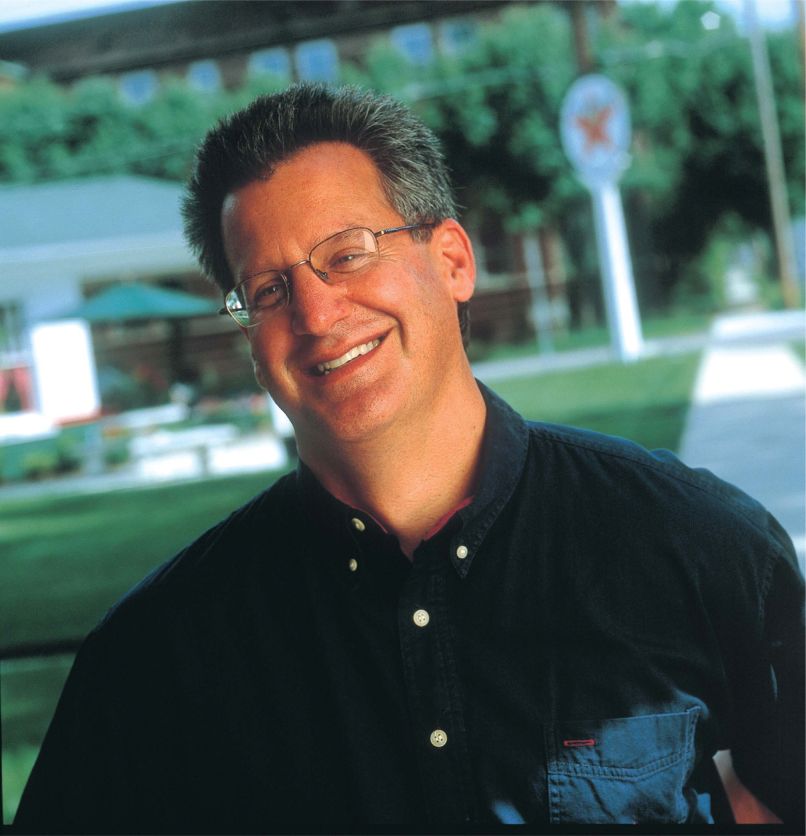 Mark Barone, Senior Director of Institutional Advancement at Syracuse University, has been an artist for over 25 years. He received his BS Degree from the University of Minnesota and his Masters of Fine Art from Southern Illinois University. A nationally-known artist, he has been named 'One of the Top 25 Most Influential Art People in the Midwest.' His art work has appeared in a variety of publications and in many solo exhibitions throughout the nation. Mark Barone, Senior Director of Institutional Advancement at Syracuse University, has been an artist for over 25 years. He received his BS Degree from the University of Minnesota and his Masters of Fine Art from Southern Illinois University. A nationally-known artist, he has been named 'One of the Top 25 Most Influential Art People in the Midwest.' His art work has appeared in a variety of publications and in many solo exhibitions throughout the nation.
He created the Artist Relocation Program (ARP) in Paducah, Kentucky, designed to help blighted neighborhoods and expand home ownership, which led to expanded investment and development in Paducah. ARP has been recognized across the nation as a national model for neighborhood revitalization using the arts. This creative leadership has been recognized with a variety of awards, including the Governor's Award in the Arts, Special Community Initiative Award from the American Planning Association, and the Bruner Award for Urban Excellence. Today, he is using Paducah as a model to convert a blighted neighborhood in Syracuse, New York into an international hub for the arts.
"We have an outstanding consulting team working with our community and the 'Culture Builds' process," according to Chamber President Johnnie Aycock. "These are knowledgeable, experienced, creative and passionate professionals that are guiding our community's strategic planning initiative." |
|
|
Top
|
| |
|
|
| |
By Johnnie R. Aycock, President
The Chamber of Commerce of West Alabama
"Right now, communities around the world are competing to attract new businesses as well as our brightest young professionals. International studies show that the winners will be communities that offer an abundance of arts and cultural opportunities. As the arts flourish, so will creativity and innovation--the fuel that drives our global economy," according to Robert Lynch, President and CEO, of Americans for the Arts.
Everyday, over 100,000 non-profit arts and cultural organizations that populate the cities and towns are making their communities more desirable places to live and work. They provide inspiration and enjoyment to residents, beautify shared places, and strengthen the social and educational fabric. The arts and culture industry has become an essential economic engine in progressive communities.
Jonathan Fanton, President of The MacArthur Foundation points out that "there is no better indicator of the health of a city, its neighborhoods, and the larger region than the state of the arts. The arts deepen our understanding of the human spirit, extend our capacity to comprehend the lives of others, allow us to imagine a more just and humane world. Through their diversity of feeling, their variety of form, their multiplicity of inspiration, the arts make our culture richer and more reflective."
Former President of the National League of Cities, Indianapolis Mayor Bart Peterson, says "not only do the arts provide a much needed social escape for many in our communities - they also help drive local economies. Having an abundance of unique art and cultural events and venues means more revenue for local businesses and makes our communities more attractive to the new generation of young, talented professionals - whose decision on where to start a career or business is increasingly driven by quality of life and availability of cultural amenities."
Arts and culture mean economic vitality, community development and increased livability. Nonprofit arts and culture organizations in the U. S. today drive a $166 billion industry--a growth industry that supports over 5.7 million full-time jobs and generates nearly $30 billion in government revenue annually. Arts and culture organizations--businesses in their own right--leverage significant event-related spending by their audiences that pumps vital revenue into local hospitality and retail businesses.
"Culture and arts are proven catalysts for growth and economic vitality," says Congresswoman Louise Slaughter, Co-Chair of the Congressional Arts Caucus. "By creating cultural hubs, art and cultural businesses and organizations help cities redefine themselves, draw visitors and new residents, and attract investment."
Cultural activities can be a major economic force in a community, but can also have a profound affect on the lives of area citizens. In addition to economic impact, study after study confirm that cultural strategies have a significant and sustainable impact on education, cultural identity, community pride, livability, neighborhood development, and the social fabric of a community.
In many of today's more progressive, vibrant communities, culture has taken a prominent role and become a centerpiece of the community's economic and social agendas and livability. Paul Allen, Co-Founder of Microsoft, underscores this fact. "I have seen the critical role that the arts play in stimulating creativity and in developing vital communities. The arts have a crucial impact on our economy and are an important catalyst for learning, discovery and achievement."
Why culture? Cultural resources work because they address numerous aspects of a community's development. Cultural programs teach problem solving, stimulate creativity, and instill self-esteem and discipline as well as other tangible organizational and relationship-building skills. A strong cultural infrastructure generates income, employment, civic pride, spurs economic growth and creates regional and national branding and identity.
Cultural resources compliment and enhance creative economic initiatives, contribute to urban and neighborhood revitalization, attract new homeowners, and facilitate business retention and relocation. Cultural resources foster community - building by creating a sense of shared identity, encouraging multicultural understanding, and providing much-needed gathering places.
The new 'Culture Builds' strategic process will determine how to leverage the area's diverse cultural resources and assets. This is a unique time and opportunity to raise the level of quality and livability of our community!
Again, you're invited and encouraged to contact The Chamber office at 758.7588 to join us in this endeavor. We'll find a place for you! |
|
|
Top
|
 |
