“Promoting Innovation and Excellence” will serve as the theme for National Charter Schools Week, May 3 – 9, 2009. Supporters of public charter schools around the nation will celebrate the remarkable rise of charter schools which have grown from a single school 17 years ago to now serve 1.4 million students at 4,600 schools in 40 states. It will also be an opportunity to inform policymakers and public officials that charter schools need their support.
“Across the nation, public charter schools are continuing to show that innovation and accountability are powerful tools that are successfully raising student achievement,” said Nelson Smith, President & CEO of the National Alliance for Public Charter Schools. “National Charter Schools Week is the time to recognize the tremendous teachers, students, and families working together in these innovative and successful schools. It is also the time to remind policymakers that there are not enough charter schools to serve an estimated 365,000 students on waiting lists. Charter school supporters will be urging policymakers and public officials to take action on a range of initiatives, from lifting state limits on charters to increasing the funding for federal programs that support charters.”
The Alliance will announce the annual 2009 Champions for Charters award winners in Washington D.C. on Tuesday, May 5th. Additionally on that day, state charter schools leaders and advocates will travel to Washington to meet with Members of Congress, where they will advocate on behalf of public charter schools, including voicing support for the President’s budget which increases funding for the federal charter school programs.
The Alliance has prepared a toolkit for supporters that provides ideas for celebrating National Charter Schools Week in their local communities.
November 16-17, 2009 2nd OAPCS Annual Conference, Transforming Education Crowne Plaza - Columbus North
Free video game for 2nd graders Targeted to second graders, the The Bakery Shop is an educational game designed to immerse the user in concepts of economics in a visually engaging way using an entertaining game context. The game was collaboratively developed by WOSU Public Media, the Advanced Computing Center for the Arts and Design (ACCAD) at The Ohio State University and the Ohio Council on Economic Education. Streams of hungry customers arrive at a bakery with a specific craving. Ingredients, cooks, and ovens must be carefully managed to produce the right food at the right time to keep customers happy. The goods produced by the bakery share similar ingredients, so choice is important and is always a trade-off between recipes.
The Bakery Shop leads users to recognize that people have many wants, that wants are unlimited and resources are scarce. The goal is to enable students to explain how resources can be used in various ways, identify goods and services, and recognize money as the generally accepted medium of exchange for goods and services.
Funding for this project was provided by eTech Ohio.
Charter School Opportunities in Federal Stimulus Dollars
The American Recovery and Reinvestment Act of 2009 (ARRA) is in no uncertain terms, a “bundle of money.” At the Ohio Alliance, we have received a number of questions about how charter schools can take advantage of these dollars.
To begin with, the ARRA is a complicated act, and because it was enacted so quickly, all the guidelines for its implementation have either not been written or are not fully interpreted or understood. Yet the entrepreneurial mantra of, “He who hesitates is lost,” applies here. In my view, the best current summary of the act can be found here and here in a summary compiled by the EducationCounsel LLC in Washington, DC. It’s a good place to start. The Alliance has also directed members to other resources in previous Insight Online editions (Mar-31; Mar-16; Feb-23) as well as on our web site.
In short, Ohio will receive about $1.8 billion over a two-year period, $1.4 billion of which must be spent on education. While the bulk of these dollars will be spent on “stabilizing” public education programs and will be distributed through established statutory formula (IDEA and Title funding). In Ohio, most charter schools will receive new money being pumped into the programs through the school districts that normally distribute these funds to charters. If a charter school receives their Title and IDEA funds directly (e.g. open-enrollment statewide e-schools), then they will received these new monies directly.
Separate from the stabilization funds per se are competitive state “Incentive” grants (state SEA distributed) and “Innovation” grants for Local Education Agencies (LEAs) -which charter schools are and these latter funds are applied for directly from the USDoE. Regarding the “Innovation” grants which represent significant opportunity for charters:
“Innovation grants or "academic achievement awards" will be competitively awarded to LEAs or partnerships to recognize those entities for significantly closing achievement gaps or increasing student achievement; exceeding the state's AMOs for performance on state assessments; making significant improvement in other areas, such as graduation rates or recruitment and placement of high-quality teachers and school leaders.”
Also:
“Competitive Innovation grants will be made to LEAs or partnerships of LEAs and non-profit organizations with strong records of improving student achievement to help them make further progress in pursuing education reforms and bringing their results to scale Overview: Direct grants are made by the Secretary to LEAs or partnerships including one or more non-profits organizations, LEAs, or consortia or schools. States are not eligible for these awards. The purpose of the awards is to allow eligible entities to expand their work and serve as models for best practices; allow them to work with the private sector; and document best practices and take them to scale.
Application: Awards can be made as soon as the funds are appropriated, but the U.S. Department of Education is expected to issue funding criteria and announce a formal application process. The grants will likely be awarded in two rounds, Fall 2009 and Spring 2010. The grant awards are designated as "academic achievement awards," to recognize eligible entities for:
• significantly closing achievement gaps or increasing student achievement;
• exceeding the state's measurable objectives for performance on state assessments;
• making significant improvement in other areas, such as graduation rates or
recruitment and placement of high-quality teachers and school leaders; and
• demonstrating that they have established partnerships with the private sector, including philanthropic organizations, and that the private sector will provide matching funds to help bring results to scale.”
What you can do:
1. Educate yourself about ARRA through resources mentioned above.
2. Be in communication NOW with your distribution districts about when and how much (Title and IDEA funding) they will be receiving. The first tranche of federal dollars has already been released and should have flowed to the districts.
3. Read carefully the rules about how these monies can be spent and what the audit expectations are so that you can be positioned for what will probably a second infusion of money at a later date.
4. Even though the competitive grant applications have yet to be issued by the USDoE, begin working on proposal language based upon provisions outlined above. The competition will be keen.
Governor’s Tough on Charter Schools Budget and Education Plan…
… and What Charters Leaders Can Do to Help
There has been much in the way of deliberation and testimony related to the Governor’s executive biennial budget and its incarnation as House Bill 1. Many questions have been raised about the devastating cuts that community charter schools would be subjected to as well as the “evidence-based” education plan and the accounting in the education budget itself. The House version of this bill will probably go out on or about April 21, and the Senate will begin its hearings and deliberations in late April and May. The Senate version of the budget bill is likely to be more charter friendly but ultimately final resolution will occur during the month of June in conference committee.
What can charter school leaders do to help?
1. Through the Ohio Alliance for Public Charter Schools’ VoterVoice system, over 17,000 email messages have been sent to Ohio legislators. We have heard directly from legislators about the impact, many telling us they have received more emails on this issue than any other. PLEASE continue this effort by going to the OAPCS Grassroots Action Center . New tools have been created for new messages.
2. Join the Ohio Alliance for Public Charter Schools and the Ohio Coalition for Quality Education in a My School, My Choice rally at the statehouse on May 13th. Two years ago we had over 1,200 parents, students and school leaders at a similar event. This year the stakes are even higher. Check out our web site for more details about the event. This rally is truly a “Save Our Schools Event.”
Planning for the 2nd OAPCS Annual State Conference is underway! Last year, charter educators from across the state led breakout sessions at the OAPCS Annual Conference by sharing insights, challenges and educational victories with their peers.
Now…it is your turn! The Conference Planning Committee and OAPCS staff would like to invite you to share YOUR expertise during this year’s conference, which will be held Nov. 16-17, featuring the theme Transforming Education.
Presenting at the 2nd OAPCS Annual State Conference represents an outstanding opportunity to share your expertise with others and to contribute to the efforts of enhancing the quality of education within Ohio’s charter schools. As a presenter, you will receive free admission to the conference. Please note that if you are submitting as a group or proposing a panel presentation, you are limited to two free admissions – all other parties will be required to pay the full registration fee. Also, presenters are responsible for bringing their own handouts and equipment.
The Conference Planning Committee is seeking highly motivated, energetic and skilled people who will present a 35-40 minute session. Below is a list of information that must be included in your response to this call for proposals.
• Your name;
• School or organization;
• Title of your presentation;
• Grade levels and subjects taught (if teacher);
• Phone number (during the summer and the school year);
• Email (during the summer and the school year);
• Co-presenter name(s) and contact information (both summer and during school year);
• Title of breakout session;
• Description of breakout session;
• How your topic relates to the conference theme, Transforming Education;
• The practical knowledge that attendees will attain;
• Special request or need;
• Bio for each presenter – including panel or group presentations; and,
• Which of the following target groups best suit your session topic:
o General Education
o Elementary
o Middle School
o High School
o Fine Arts
o Specialists
o Special Education o Administration
o Staff support
o Parents
o Board Members
o 21st Century
o Authorizers
The information, as outlined above, must be received by April 30, 2009 for consideration. No handwritten submissions, please. You can email your paperwork to bleija@oapcs.org, fax to (614) 744-2255 or mail to: OAPCS 33 N. Third Street, Suite 600; Columbus, OH, 43215.
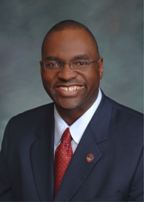
Colorado Senate President Peter Groff, who participated in the March 11 OAPCS “Change and Choice: A Dialogue on Ohio’s 21st Century Education Goals” event, is slated to serve as director of the Faith-Based and Community Initiatives Center in the office of Education Secretary Arne Duncan.
Groff, an attorney, political veteran and highest-ranking African-American elected official in Colorado history, came to Ohio to share his unique perspective and experience in public education reform policy and politics, including the role of charter schools.
Sadly, no Democrat legislators in the Ohio House or Senate attended the OAPCS event, and none who received invitations to meet privately with Sen. Groff accepted.
Fortunately, more Democrats across the country are supporting charter schools and promoting public policies that encourage their continued growth. President Obama has been outspoken in his support of charter schools, as has his Education Sectary Arne Duncan. Groff will bring much to the team in his new role.
In a recent segment of MSNBC’s “Morning Joe” show, Gov. Ted Strickland was called out for his anti-charter position.
Are Charter Schools Making a Difference? A Study of Student Outcomes in Eight States. Effects on Achievement, Attainment, Integration, and Competition.
Key Findings of the RAND Education Report, 2009:
• The most striking finding was that attending a charter high school positively effects the chance that a student will graduate and go on to college. This is the first study to examine how charter schools affect long-term student attainment, and suggests the need to look beyond achievement test scores when measuring the effectiveness of charter schools.
• Charter schools are not skimming the highest-achieving students from traditional public schools. In Ohio, specifically, students entering charter schools were performing much lower than their peers before transferring to a charter school. Thus, reports that compare charter performance need to be mindful to include the pre-transfer level of academic achievement.
• Charter middle and high schools produce achievement gains that are about the same as those in traditional schools. Achievement gains for charter elementary schools are challenging to estimate and remain unclear because elementary students typically have no baseline test scores. The study raises questions about the performance of virtual charter schools and recommends further exploration to better understand the model and how it effects different learning styles.
• Transfers to charter schools did not create dramatic shifts in racial stratification. The racial composition of the charter schools entered by transferring students was similar to that of the traditional schools from which the students came.
• Charter schools generally don’t perform well in the first year of operation. Opening a new school is challenging, regardless of whether the school is a charter school. Across locations, the researchers found a general pattern of improved performance as schools age.
• Charter schools don’t help or harm student achievement in nearby traditional public schools.
• Of the eight states, Ohio is the outlier, with an especially wide range of variation. The study suggests that this high variation in performance may be related to resource constraints.
• Eliminating or improving the lowest-performing charter schools has the potential to improve average results substantially. The challenge is to minimize the number of charter failures without sacrificing successful charter schools. Improving the performance of charter authorizers is suggested as a place to start.
The policy implications include:
1. seek ways to dampen the negative achievement impacts frequently experienced by students enrolled in first-year charters;
2. work with authorizers to ensure clear plans for the start-up period, provide additional start-up grants to approved operators,
3. reduce the reliance on brand new start-up schools by easing the process for existing public or private schools to convert to charter status; and,
4. carefully study and find ways to improve the performance of virtual charter schools.
Charter Schools: Practices for High Performance
July 20–July 23, 2009
Charter Schools: Practices for High Performance is a four-day leadership development program designed specifically to help charter school leaders develop the essential skills and strategies to build capacity and improve student outcomes. This intensive program draws on the expertise and research of Harvard faculty and leading practitioners in framing the challenges faced by charter schools and their school communities while also attending to the larger state-level policy environment.
Benefits of Attending
As a Charter Schools leader, this unique program will help you:
• Examine elements of high performing charter schools
• Explore issues of scale-up that support positive outcomes for students
• Address topics of internal accountability that enhance student learning
• Allocate resources (human and financial) to build organizational capacity
• Devise a theory of action for working effectively with external agencies and constituencies
Research conducted at The Intergenerational School (TIS) during the 2007-2008 school year by Daniel R. George, a doctoral candidate in medical anthropology at Oxford University, was recognized as the “most innovative psychosocial intervention of 2008” by Alzheimer's Disease International (ADI) and the Fondation Médéric Alzheimer (FMA) during the 24th annual ADI conference in Singapore on Friday, March 27th, 2009.
The study was designed by Mr. George and Dr. Peter Whitehouse, a geriatric neurologist at Case Western Reserve University, and Co-Founder of the school, to explore whether intergenerational volunteering could enhance quality of life for persons with mild to moderate dementia. Ultimately, the study suggested that intergenerational volunteering promotes quality of life for persons with mild to moderate dementia through a variety of bio-psychosocial pathways, particularly through the mechanism of decreased stress. In addition to demonstrating the possible health benefits derived from interacting with children in a calm and orderly educational environment, the study also confirmed that older persons challenged by memory loss can still make major contributions to their community.
Fifteen residents of Judson at University Circle, a continuing care retirement community in Cleveland, with a diagnosis of clinical dementia were randomized into two groups. One group of eight persons volunteered once a week for five months at The Intergenerational School, recognized by the US Dept of Education as an innovative charter school that is closing the achievement gap. These participants partnered with the children in a variety of activities as part of the school’s regular intergenerational programming: reading and writing with kindergarteners (5-and-6-year-olds) and older elementary students (10-to-14-year-olds), providing life history narrative in interviews, assisting in art projects, and participating in a focus group. The control group of seven persons participated in a peer educational seminar at Judson over the same time interval.
Mr. George was flown to the meeting in Singapore to accept the award, and will receive a $5,000 grant to disseminate the research results.
 Colorado Senate President Peter Groff, who participated in the March 11 OAPCS “Change and Choice: A Dialogue on Ohio’s 21st Century Education Goals” event, is slated to serve as director of the Faith-Based and Community Initiatives Center in the office of Education Secretary Arne Duncan.