Louisiana legislators are very seriously considering a ban on kratom in the state! The Global Kratom Coalition is fighting this ban and urging you to join us. If you want to keep kratom safe and accessible in Louisiana.
Dear Governor Landry and Members of the Louisiana Legislature,
We, the undersigned Louisiana residents and consumers, urge you to reject efforts to criminalize kratom (Mitragyna speciosa), a natural botanical with a long history of traditional use. Instead, we ask you to follow the science and adopt Kratom Consumer Protection Act (KCPA) legislation which ensures safe access while protecting public health.
Kratom Should be Regulated, Not Banned
Extensive research shows that while botanical kratom interacts with opioid receptors, its effects and risks are dramatically different from those of prescription or illicit opioids upon which it is often compared. It is a partial opioid agonist like caffeine, not a full agonist and therefore does not hold the same level of risk.
1. Low Substance Use Disorder Severity
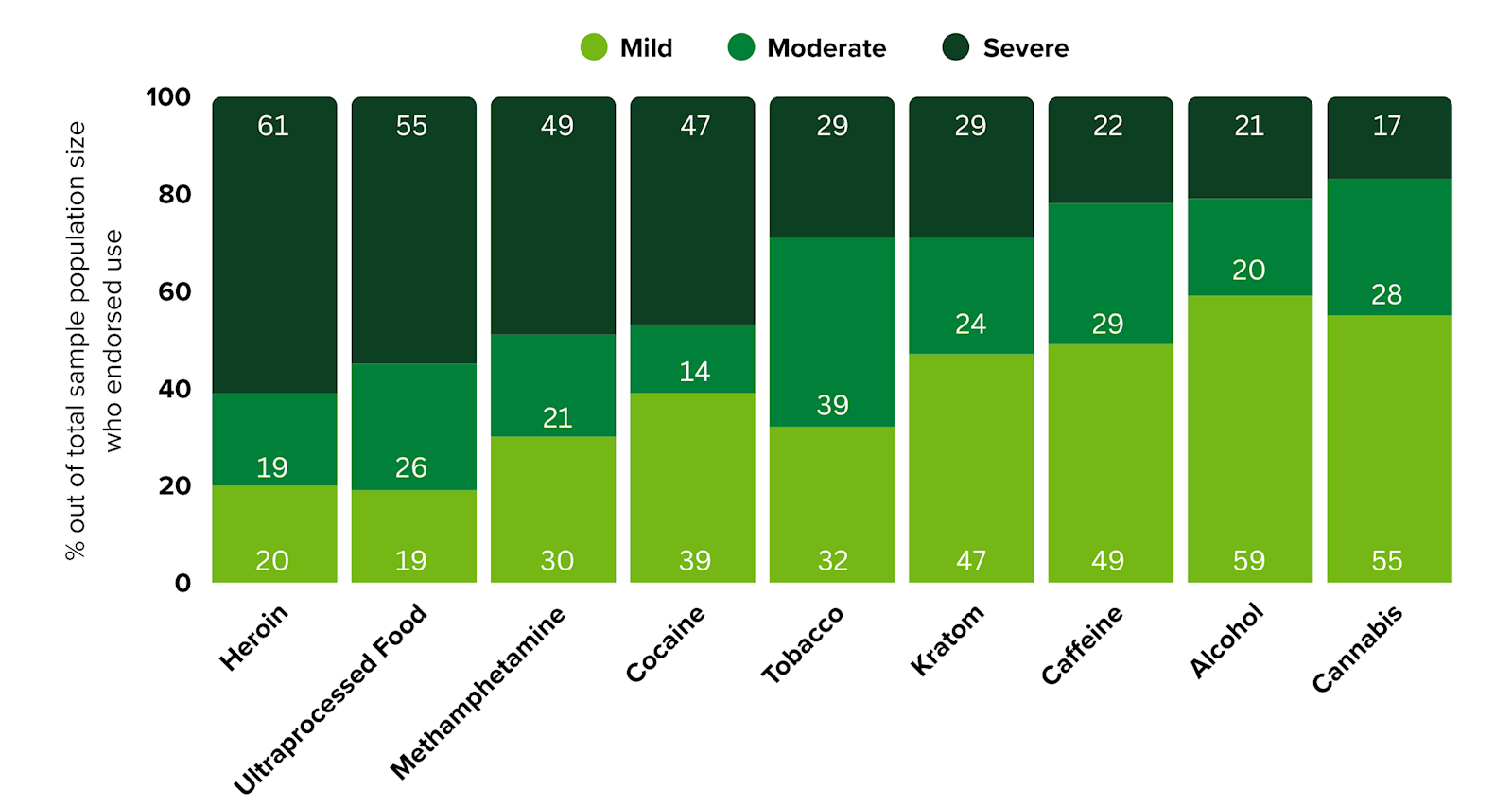
According to a meta-analysis of public health sources by the Global Kratom Coalition (see graph) the severity of substance use disorder for kratom is similar to caffeine.
2. Safer Alternative for Pain & Opioid Dependence
A growing body of evidence highlights kratom’s potential as a harm-reduction tool, especially in states like Louisiana facing a deadly opioid crisis. “Survey data from the US and field studies in Southeast Asia (SEA) showed most kratom use was for health-related benefits … (and) problem abuse and addiction were not common and was generally more tolerable and readily self-manageable as compared to opioids” (Frontiers in Pharmacology, 2022). A 2020 study involving more than 2,700 self-reported kratom users, found 41% of participants used kratom to alleviate opioid withdrawal symptoms, and among these, 35% reported abstaining from opioids or heroin for over a year (Drug and Alcohol Dependence, 2020) — critical amid Louisiana’s opioid crisis with 1,130 opioid-involved deaths in 2023 (Louisiana Department of Health).
3. Criminalizing kratom does not work, it only puts burdens on the state and its economy. Here are key ways criminalization fails:
- Harms Public Health – Restricting access could push people toward more dangerous substances.
- Destroys Small Businesses – Louisiana vendors who sell lab-tested, unadulterated kratom would be forced to close, while illicit markets thrive.
- Wastes Law Enforcement Resources – Arresting otherwise law-abiding citizens for possessing a natural product is not a solution.
4. Regulation Works. Model regulations found in the Kratom Consumer Protection Act – adopted in Oklahoma (2024) and Georgia (2024) and 13 other states – includes common sense product guidelines such as age limits and labeling standards. The legislation also prohibits adulterated or synthetic products based on 7-hydroxymitragynine (otherwise known as “7”) which is known to be untested, unproven and dangerous.
We urge lawmakers to consider this alternative approach:
✔ No criminal penalties for possession or sale of natural, unadulterated kratom
✔ Address the real problem by prohibiting synthetic derivatives of kratom alkaloids
✔ Pass the Louisiana Kratom Consumer Protection Act (KCPA) to regulate—not ban—responsible use
✔ Protect small businesses and enforcement through existing licensing systems
✔ Author transparent policymaking grounded in science, not fear
We stand ready to work with you on sensible policies. Please do not punish Louisiana families for choosing a natural alternative.